ZHOU NA
My Body Holds a Firework
 |  |  |
|---|---|---|
 |  |  |
 |  |  |
 |  |  |
 |  |  |
 |  |
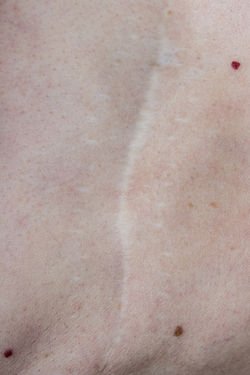
These portraits include close-ups of mastectomy scars.
I photographed the wounds parallel to the ground;
rotated upright, the same marks resemble a firework.
The change is only an axis, not a cure.
This rotation questions how framing—
along with propriety and the social training around East Asian womanhood—
shapes not only the image, but also the weight of meaning placed on the female body.
For many women, the deepest injury after breast cancer is not the surgery itself,
but the way society ties scars to questions of fertility, femininity, and worth.
The wound becomes more than medical:
it is also cultural, psychological, generational.
The “firework” is not celebration.
It is residue—
a scar that refuses erasure,
and a bright insistence on life.